
Pest control in Marietta › Rodent & wildlife removal › Dunwoody
This page covers rodent and wildlife work in Dunwoody, where the more useful question is not which opening let the animal in but how it reached the opening. For the whole method, start here, then read this for the local part.
What shapes the job here
How many limbs are bridging the roof, how many openings there are and how high up, roof pitch and whether a two-story gable needs staging, whether young are in the attic, how much insulation is soiled, and whether the scope is trapping only or trapping plus exclusion.
1 The canopy grew into the roofline
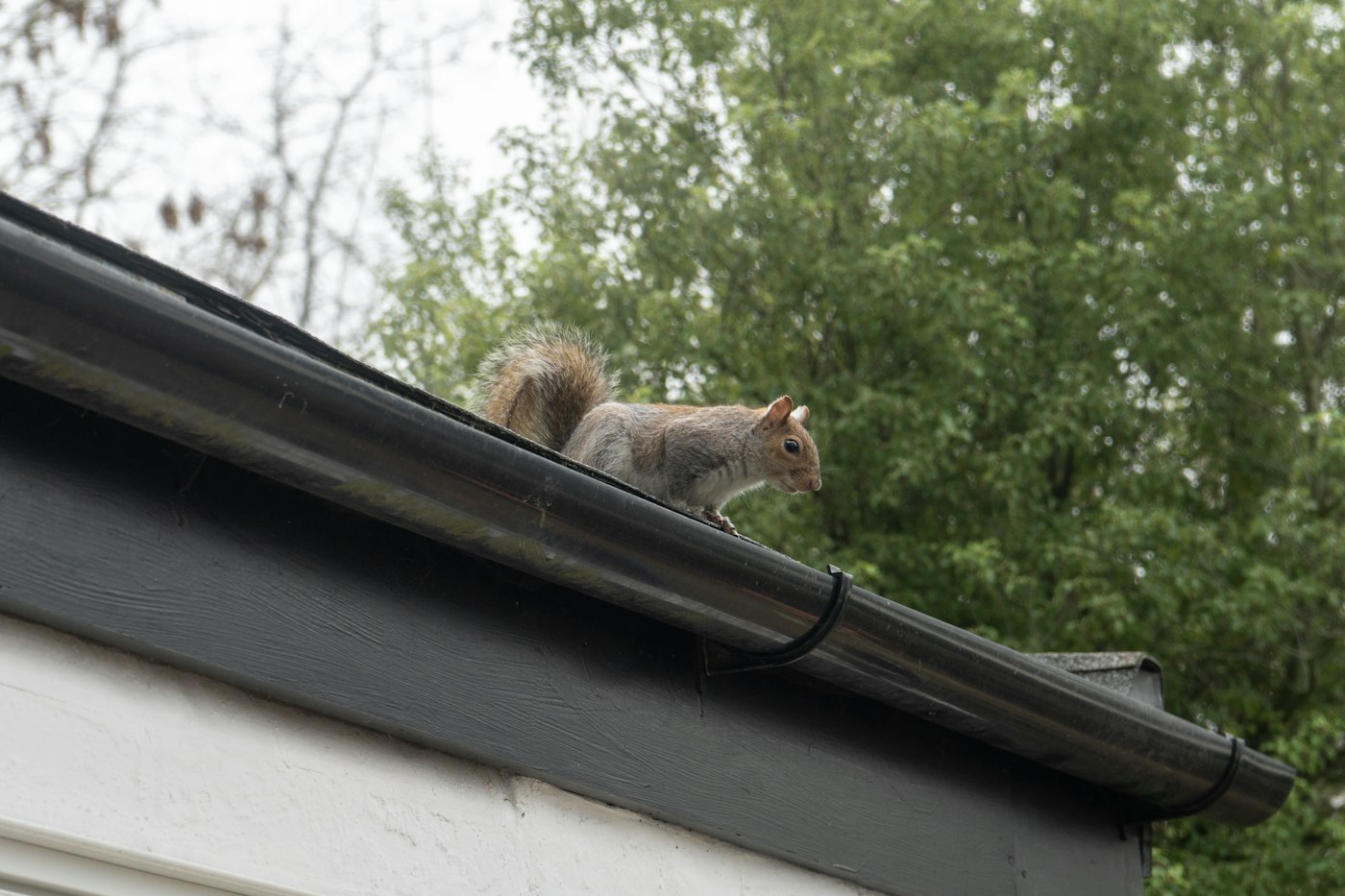
Dunwoody’s median home was built in 1984, and the hardwoods that were preserved specimens or young plantings when those subdivisions went in have had forty years of growth since. A limb that cleared the roof by fifteen feet in 1984 is resting on the gutter now. Nothing about the house changed. The approach route grew into place.
That is the usual sequence behind a first-time attic problem here, and it is why long-time residents are so often convinced something must have failed. Usually the openings were always there. What is new is that something can now reach them. Stand at the corner of the house and look up before you book anything: if a branch is within eight feet of the roof, you have found the route.
Clearance is specified against what a gray squirrel can actually do. Six to eight feet is a comfortable jump, so the working standard is eight to ten feet of horizontal separation between the nearest branch and the roof edge. That one piece of work removes the approach for every animal that travels by canopy, across the whole property, in an afternoon. It is also the measure most proposals do not mention, because it is arborist work and a pest company earns nothing on it.
2 Check the tree rules before the arborist comes
One administrative point trips people up constantly. Dunwoody is in DeKalb County, not Cobb. Permitting, code enforcement and extension guidance all come from DeKalb, and the city maintains its own tree protection ordinance on top of that, so significant pruning or the removal of a specimen hardwood can need approval that the same work would not require a few miles west.
Check before you schedule, not after. A local arborist will know the current requirements; a crew that works mostly in Cobb may not, and the homeowner is the one left holding the violation. It is also worth asking for the clearance to be written into the work order in feet, because “trim back from the house” and “ten feet of separation at the roof edge” are not the same instruction.
Count the limbs first
How many branches touch or overhang the roof, and where you hear the noise. That is what a licensed local crew needs to tell you whether this is a one-opening job or a whole roofline.
3 Then seal the roof, and do not bother with the ground
Bait stations around the foundation do very little for the animals causing most Dunwoody attic complaints. Gray squirrels and roof rats arrive by branch and go in at gable vents, ridge ends, soffit returns and utility penetrations. They never touch your ground, so a perimeter station is placed where they are not.
The sealing is the part that lasts, and it has to be made of something an animal cannot chew: galvanized hardware cloth, sheet metal, or new wood behind metal, fastened rather than stuffed, with vents screened from behind so they keep venting. Two-story elevations under canopy make this slower here than on an open lot, which is a legitimate difference in scope rather than padding. Trapping clears what is inside; sealing ends it; a proposal with the first and not the second is a proposal to repeat the visit next autumn, as set out in the complete guide.
Timing is the same as the rest of the metro. Calls start the week overnight lows drop, usually in the middle of October. Under heavy canopy there is a second reason to work ahead of that: by November the gutters are full of oak leaf, water sits against the fascia all winter, and next year’s opening is being made while you wait.
4 Nearby towns in this hub
Similar canopy over slightly older stock, and what changes once there are young in the insulation.
Reading droppings, gnaw marks and rub marks, and what a bait station does and does not do.
The other heavily wooded town in the hub, with battlefield land supplying the animals instead of street canopy.
5 Questions
How far back do the branches have to be cut?
Eight to ten feet of horizontal clearance between the nearest limb and the roof edge is the working standard, because a gray squirrel jumps six to eight feet without difficulty. Anything tighter leaves the bridge in place. Put the figure in the work order rather than asking for a trim.
Do I need permission to prune in Dunwoody?
Possibly. Dunwoody is in DeKalb County and maintains its own city tree protection ordinance, so significant pruning or removing a specimen hardwood can require approval that the same work would not need in Cobb. Ask a local arborist before scheduling.
Why did this start after thirty years in the same house?
Because the trees grew. On 1984 stock, hardwoods that cleared the roofline comfortably then have had four decades to close the gap. The openings were probably always there; what changed is that something can now reach them.
Will bait stations around the house help?
Not for what is usually in a Dunwoody attic. Gray squirrels and roof rats arrive by branch and enter at the gable, the ridge end or a soffit return without touching your ground. Clear the limbs, close the roofline, and get it done before the middle of October.
Start here
The complete Marietta pest control guide
What a correct job looks like on Piedmont red clay, how crawlspace and slab homes differ, and the questions that separate a real proposal from a guess.
Jaylan Jones — Cobb County Pest Solutions publishes independent guidance for North Georgia homeowners. We are a referral service, not a licensed pest control contractor, and we do not perform the work. How we work.

