
Pest control in Marietta › Termite control › Bond renewals
A termite bond renewal arrives once a year and most people pay it without reading it. This page covers what the renewal actually maintains, what the annual visit is supposed to include, what happens if you let it lapse, and how a bond moves to a buyer when you sell. Start with the complete guide for how the rest of the work fits together.
The short version
A bond is a service contract, not an insurance policy. It stays alive as long as you renew on time and keep your side of the terms. Let it lapse and you do not pause it, you end it, and starting again is a new agreement on a company’s current terms.
1 What the renewal maintains
Three things, and none of them is chemistry. The first is the company’s obligation. For as long as the agreement is current, a licensed contractor is on the hook to come back and treat under whatever terms your bond names, whether that is retreatment only or retreatment with a repair commitment up to a stated limit. Stop renewing and that obligation ends on the expiry date, even though the treated soil is still in the ground.
The second is the inspection cycle. Somebody comes back once a year and looks, which in Georgia is the single most useful thing in the whole arrangement. Eastern subterranean termites here forage year round on red clay, so twelve months is long enough for a new colony to find a corner of your foundation and start working.
The third is the record. A continuous file of dated inspections, with findings and any retreatments noted, is what a buyer’s agent, a closing attorney or a second company will ask to see. A house with an unbroken record is a different proposition from a house where somebody says the work was done around 2019 and cannot find the paperwork.
2 The annual re-inspection
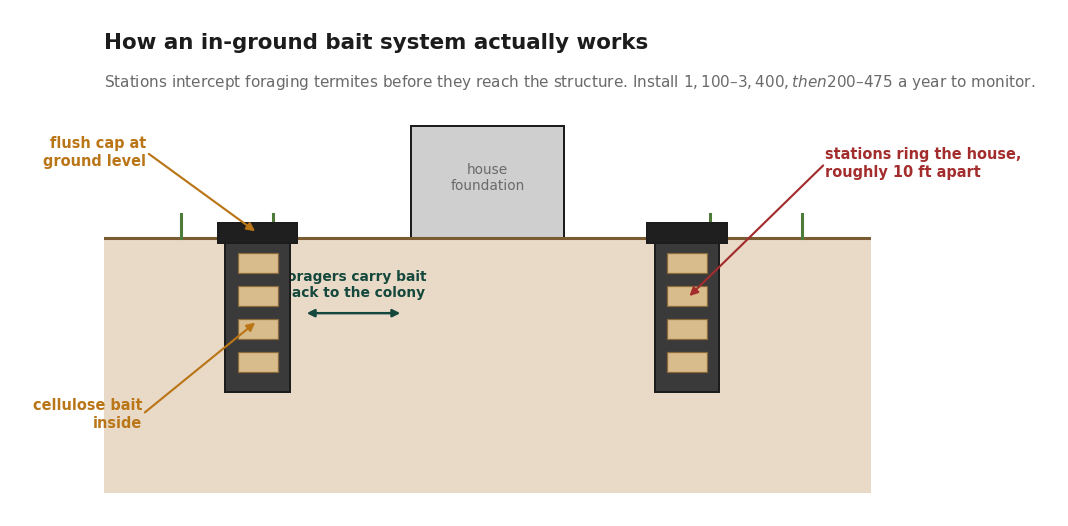
This is the part you are entitled to and the part most often reduced to a van in the driveway for ten minutes. A real re-inspection repeats the original work: the exterior foundation walked and read, the crawlspace entered, piers and the sill and the band board checked, moisture taken where it matters, the interior perimeter and the garage looked over, and bait stations opened and serviced one by one if you have them.
It should also produce a document. A dated report naming who attended, what was found, what was obstructed and what was recommended goes into your file. If you have been renewing for six years and have one piece of paper, you have been buying an invoice rather than an inspection.
Be present if you can, and raise anything that changed: a new deck, a regraded bed, a damp corner after the last storm, swarmers on a windowsill in April. Those are the details that direct where somebody looks, and they are the details only you know. More on what a thorough visit covers is in the Marietta pest control guide.
Read the renewal before you sign it
Terms change between years. A licensed local company should walk you through what is different this time.
3 Lapses and reinstatement
A lapse is not a pause. On the day the agreement expires the company’s obligation stops, and anything found afterward is yours. People discover this at the worst moment, usually when a swarm appears in spring and they go looking for a document that expired in November.
Getting back in is possible and not automatic. Expect a fresh inspection first, because no company takes on an obligation for a house it has not looked at recently. If that inspection finds activity, the house usually has to be treated again before any new agreement starts. Some firms honor a short grace window. Others treat a lapsed bond as closed and will only write a new one on current terms.
There is also a waiting period in most new agreements, a stretch at the start during which the retreatment commitment is not yet in force. Reinstatement after a lapse often restarts that clock. If a renewal notice has gone astray, call the week you notice rather than the month after.
4 What happens if you simply stop
Nothing visible, which is exactly the problem. The treated band is still in the soil and keeps working for a while, degrading unevenly where water moves and where the ground has been disturbed. Bait stations stay in the yard and stop being serviced, which turns them into plastic lids. Nobody comes, nobody looks, and the house carries on looking fine.
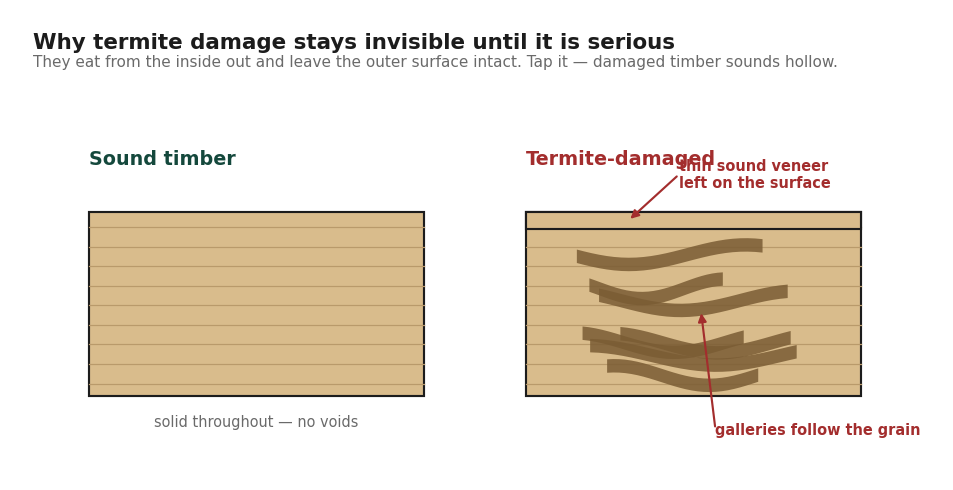
What you have given up is the early warning and the obligation. In Zone 1 territory a colony that finds a gap can work inside a band board for a couple of seasons before anything shows at eye level. Without an annual visit the first notice is usually a spring swarm indoors, by which time the question is no longer whether to treat but how much carpentry is involved.
The second thing you give up is the paper trail, and that one shows up at closing. A gap of several years in the inspection record is something a buyer’s agent will notice and ask about, and it tends to be resolved with a fresh inspection on your schedule rather than theirs. If you need a licensed company to pick up a lapsed house, start here.
5 Transfer when you sell
Most Georgia bonds are transferable and almost none transfer by themselves. The contract names what has to happen: notice to the company within a set window around the sale, a transfer form signed by the new owner, often an administrative charge, and sometimes an inspection before the company will put a new name on the agreement.
Read the transfer clause carefully, because this is where coverage quietly shrinks. A bond that carried a repair commitment for you may transfer to the buyer as retreatment only. A limit may reset or carry over. A waiting period may begin again for the new owner. None of that is hidden; it is simply in a clause nobody opens during a closing.
Sellers: find the agreement, ask the company what transfer requires, and file the answer with the treatment paperwork. Buyers: ask for the bond and the last several inspection reports, not just the termite letter, since the letter describes one day and the bond describes a relationship. For how companies differ on this, see pest control across Cobb County.
Keep reading in this topic
Retreatment-only or repair, limits, exclusions and the clauses that void one.
What an inspector should check, and what accessible areas quietly leaves out.
The termite letter is a different document from your bond, and it promises nothing.
6 Questions
Do the terms change at renewal?
They can. A renewal is a new year of an agreement, and companies do revise terms, limits and exclusions between years. Read the document you are signing rather than assuming it matches the one in your drawer, and ask directly whether anything about coverage has changed since last year.
Can I move my bond to a different company?
Not as a transfer. A bond is an obligation held by the company that did the work, so another firm will not adopt it. What they will do is inspect, propose their own treatment and write their own agreement. That is a fresh start, usually with a new waiting period, which is worth weighing before you leave a long unbroken record behind.
I built a deck against the house. Does that matter?
Yes, and tell them before the next renewal rather than after a claim. Anything that disturbs treated soil, a deck footing, a French drain, a regraded bed, a new patio, breaks the continuous band and is a common reason a company declines to treat under the warranty. Disclosed in advance, that stretch simply gets retreated.
Is a bond worth keeping on a house with no history of termites?
In Georgia, generally yes, because the state is Zone 1 and the pressure never really stops. No history means no history yet. The annual look is the main value, and most homeowner policies exclude termite damage entirely, so there is no other product standing behind the structure.
Start here
The complete Marietta pest control guide
What a correct job looks like on Piedmont red clay, how crawlspace and slab homes differ, and the questions that separate a real proposal from a guess.
Jaylan Jones — Cobb County Pest Solutions publishes independent guidance for North Georgia homeowners. We are a referral service, not a licensed pest control contractor, and we do not perform the work. How we work.

