
Pest control in Marietta › General pest control › Canton
This page covers what general pest work involves in Canton, a town split between old mill-era housing by the Etowah and new subdivisions on the ridges above it. Start with the Marietta pest control guide for the whole method, then read this for the local part.
What shapes the job here
Foundation type above all, measured perimeter and lot size, crawlspace clearance and access, distance to the river bottom, how damp the soil band stays, the species involved, severity and the cadence you choose.
1 The old town by the river
Canton grew up around the mill on the Etowah, and the grid of frame houses on the streets below downtown still carries that era: small footprints, brick pier foundations, open crawlspaces, original framing and porches that have been rebuilt more than once. Those houses were never sealed underneath. Air, soil moisture and insects move freely under the floor, and the river keeps the air damp for longer each morning than it would be a few miles up the hill.
Piedmont red clay compounds it. It holds water far longer than the sand south of the fall line, so the ground under a pier house near the Etowah bottom rarely dries out completely. That combination of damp soil, close soil-to-wood contact and softened old framing is precisely what carpenter ants want. They do not eat wood; they excavate wood that is already damp, so a carpenter ant call in old Canton is a moisture problem in disguise with a hundred years of history behind it.
The inspection on one of these houses is a crawl, not a walk. Somebody has to go under with a light and a moisture meter, follow the piers, and look at the band joist and the porch posts. If nobody opens the crawl door, you did not buy an inspection.
2 The new town on the ridge
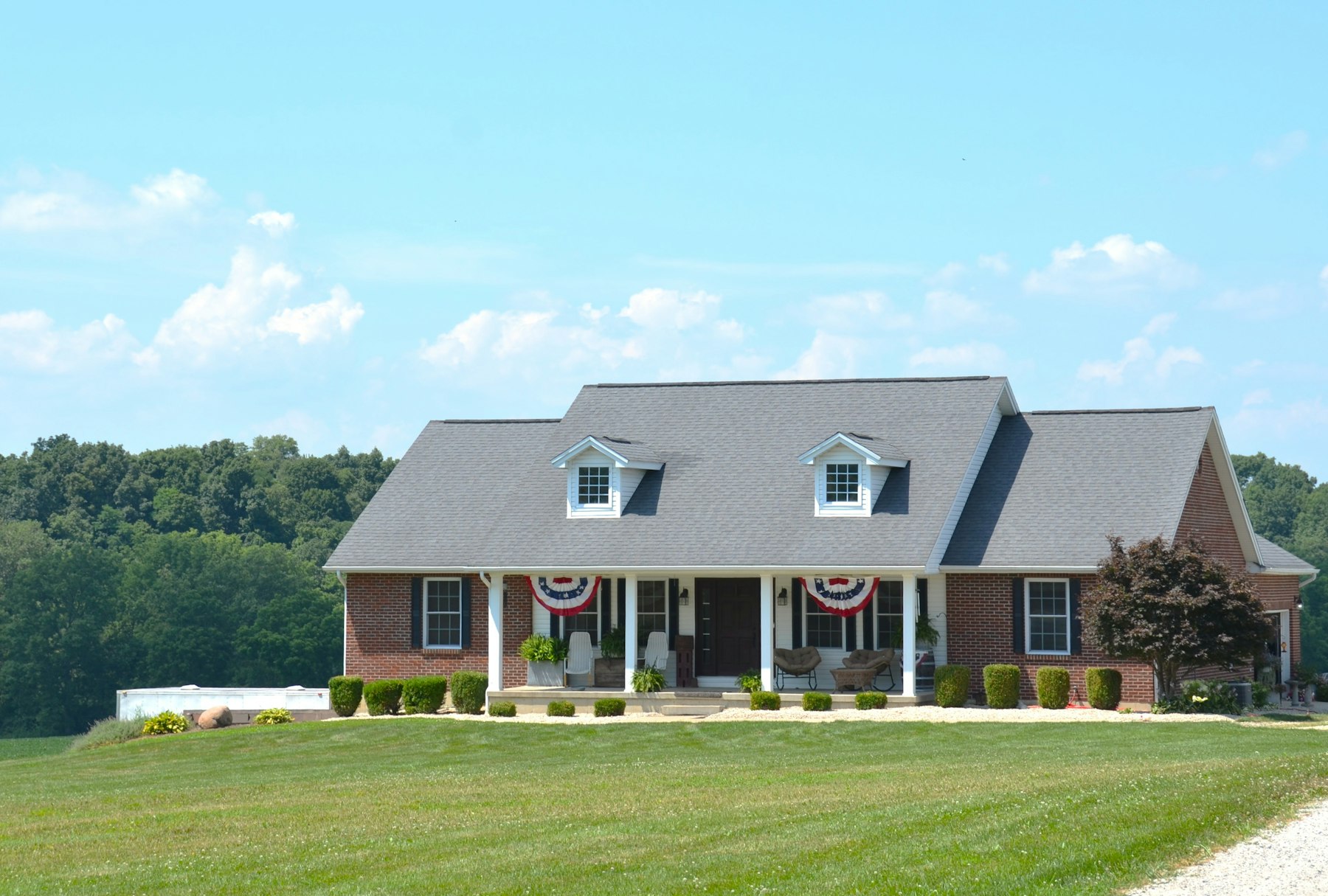
Drive out from the center and the housing changes completely. The subdivisions that filled Canton’s outer edge over the last twenty-five years are slab-on-grade on land that was cleared and graded flat, with young trees, engineered swales and mulch beds installed tight against the brick on handover day.
A slab house has no crawlspace to inspect, so the work happens at the slab edge. The gap between slab and brick veneer runs continuously around the house and gives odorous house ants a sheltered ring road. They nest in the mulch and in the veneer void, and they cross at the sill, under door thresholds and at utility penetrations. Crush one and it smells of rotten coconut, which identifies them before anyone opens a tank.
The common failure on these lots is cosmetic: mulch topped up each spring until it sits above the brick ledge, irrigation heads aimed at the wall, and a downspout extension that was removed when the beds were redone. Correct those three and the treatment lasts; leave them and you are calling again in a season. The reasoning is in the complete guide.
Pier house or slab house
Say which one you have and roughly when it was built. In Canton that single answer changes the whole visit.
3 What stays the same in both
Whichever Canton you live in, a correct job starts outside. The first pass is a slow lap of the foundation, reading grade and drainage: where the ground slopes toward the house instead of away, where a downspout dumps against the wall, where mulch is heaped above the brick ledge, where a crawlspace vent is blocked, where shrub branches touch siding and bridge the barrier. Product goes down after that, on the soil and lower wall, concentrated where insects actually cross. Interior work is targeted at an identified harborage, not sprayed along every baseboard out of habit.
Quarterly exterior service is the regional cadence. North Georgia has no dormant season, only a slower one, and Canton sits far enough north to get a few more cold nights than Marietta without ever getting a real shutdown. A band laid in March is weathered thin by July either way.
German cockroaches remain the exception. They live in the wet walls behind kitchen and bathroom plumbing and need gel bait placed in the harborage itself, with a vacuum and a follow-up over several weeks. No exterior band reaches them, in a mill house or a new build.
4 Nearby towns in this hub
Canton’s new half without the old half: median build year 2005 and slab-on-grade throughout.
Downstream toward Allatoona, with lake lots and a depot-era old town of its own.
Mixed eras under the Kennesaw Mountain canopy, where shade rather than the river sets the terms.
5 Questions
My house is one of the old mill-street houses. Is a crawlspace ground cover worth it?
On a pier house close to the Etowah it is usually the highest-value change available. A sealed vapor barrier over bare soil cuts the humidity reaching the framing, which takes away the softened wood carpenter ants need. It is building work rather than pest work, but a technician who recommends it before recommending more product is telling you the truth.
My subdivision house is only a few years old. Do I still need service?
New construction is not a protected state. The slab edge, the thresholds and the utility penetrations are all open routes from day one, mulch goes in against the brick before the first owner moves in, and Georgia sits in Termite Infestation Probability Zone 1, the highest rating issued. A new house changes what the work looks like, not whether it is needed.
Does being further north than Marietta shorten the season?
Only slightly. Canton gets a few more cold nights, but north Georgia has no genuinely dormant season, only a slower one, and the clay holds enough moisture through winter that foraging never fully stops. Quarterly exterior service is still the regional cadence here.
Start here
The complete Marietta pest control guide
What a correct job looks like on Piedmont red clay, how crawlspace and slab homes differ, and the questions that separate a real proposal from a guess.
Jaylan Jones — Cobb County Pest Solutions publishes independent guidance for North Georgia homeowners. We are a referral service, not a licensed pest control contractor, and we do not perform the work. How we work.

