
Pest control in Marietta › General pest control › Kennesaw
This page covers what general pest work involves in Kennesaw, where the canopy around the mountain matters more than the build year does. Start with the Marietta pest control guide for the whole method, then read this for the local part.
What shapes the job here
Which era your house is from and therefore which foundation, measured perimeter, how much canopy sits over the roof and beds, how long the shaded side stays damp, the species involved, severity and the cadence you pick.
1 Canopy is the local variable
Kennesaw is a shaded town. The battlefield park and the ridge lines around it carry mature hardwood, and most neighborhoods either sit under it or back onto it. Shade is pleasant and it is also the reason the north and east walls of a Kennesaw house can stay damp through a week of dry weather while the sunny side has dried in an afternoon. Red clay under that shade drains slowly and stays cool, so the soil band against the footing holds moisture almost permanently.
Every October the same canopy drops a load of leaves that the wind banks against the foundation. Left there, that litter is a damp insulating blanket over the exact strip a technician treats, which is both the harborage insects want and the barrier you paid for, smothered. Gutters fill at the same time and overflow onto the bed below, which keeps the corner wet all winter.
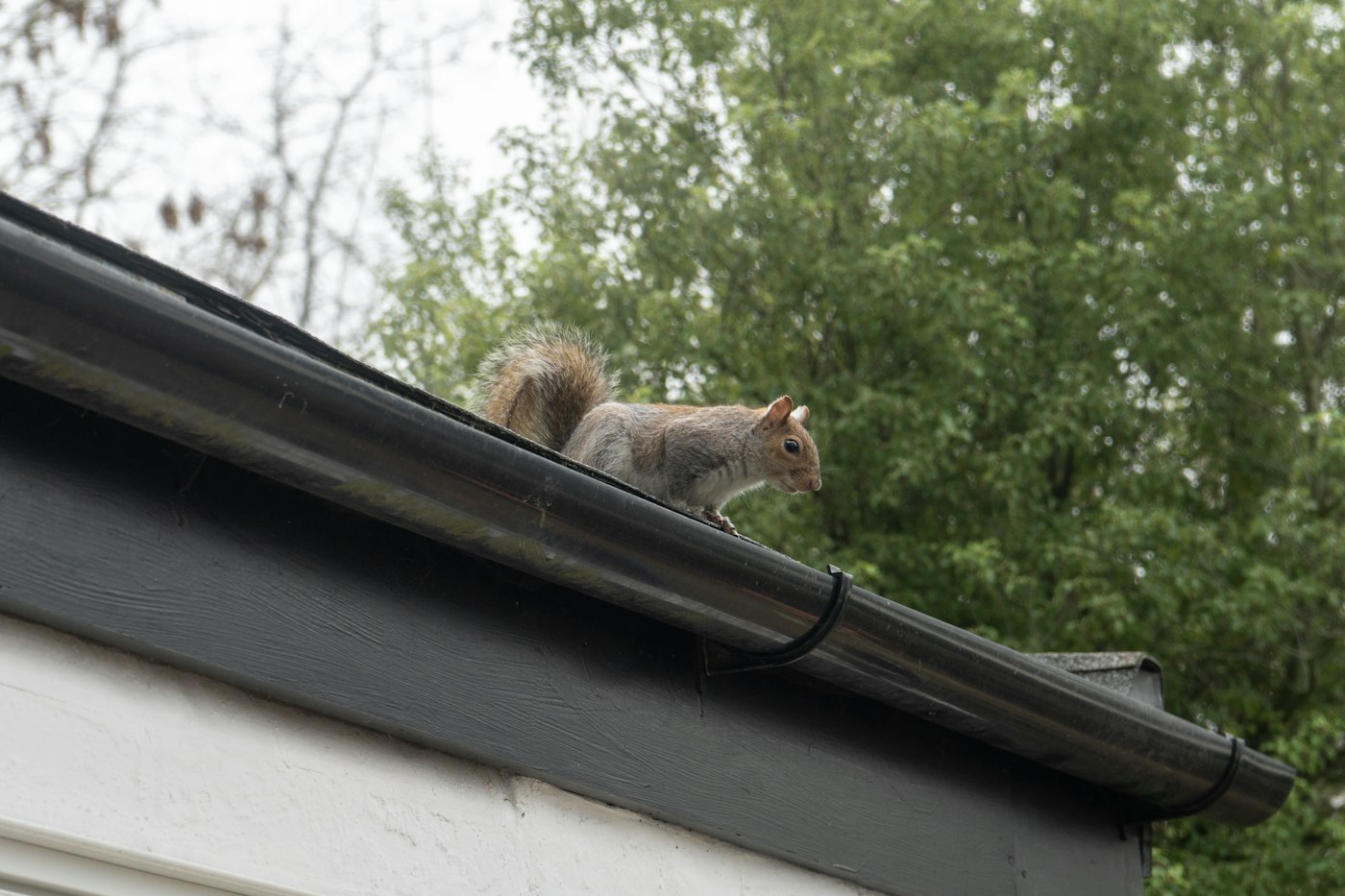
Limbs are the third part. Branches touching siding or lying on the roof bridge any treated band completely. Ants, and later in the autumn rodents, use them as a road. A technician worth having will point at the limb before pointing at the sprayer.
2 Three eras, three different jobs
Because Kennesaw grew in waves rather than one boom, your neighbor’s service is a poor guide to yours. The older houses near the depot and along Main Street sit on crawlspaces or piers, with exposed framing and soil-to-wood contact to inspect. The 1960s and 70s ranches have low crawlspaces with short vents, usually half-buried in fifty years of added mulch. The Town Center-era subdivisions are slab-on-grade, with a continuous sheltered gap between slab edge and brick veneer that ants use as a ring road.
Those are three different inspections. On a crawlspace house somebody has to go under with a light and read moisture; on a slab house the work is at the slab edge, the thresholds and the utility penetrations. Any company that gives you the same twenty-minute visit for all three is selling a routine, not a service.
Either way the job starts outside. A slow lap of the foundation comes first, reading grade and drainage: where the ground slopes toward the house, where a downspout discharges at the wall, where mulch sits above the brick ledge, where a vent is blocked. Spraying baseboards first is skipping the part that decides the outcome. That argument in full is in the complete guide.
Tell them which Kennesaw you live in
Depot-era, 1970s ranch or Town Center slab. Each one changes where a licensed local crew starts.
3 What the shade actually brings
Carpenter ants are the species that most rewards a canopy. They do not eat wood, they excavate it to nest, and they excavate wood that is already damp. A shaded fascia that never dries, a porch post under a dripping gutter, a deck ledger with no flashing, a window sill on the north wall: those are carpenter ant addresses, and the ants are the symptom. Deal with the water and the colony loses its reason to be there.
Odorous house ants work the leaf litter and the mulch. Crush one and it smells of rotten coconut. They move indoors after heavy rain floods their outdoor nests, and again in a dry spell when they follow condensation lines to water, so you get them in a wet June and a dry August for opposite reasons. Quarterly exterior service is the regional cadence because north Georgia has no dormant season, only a slower one, and under shade the ground never gets the drying that would shorten it.
German cockroaches are unaffected by any of this. They live in the wet walls behind kitchen and bath plumbing and need gel bait placed in the harborage itself. Nothing applied outside reaches them.
4 Nearby towns in this hub
Next town north, with lake-side lots at Lake Acworth and Lake Allatoona instead of battlefield canopy.
The ranch belt and the Square-era frame houses, where build era rather than canopy sets the job.
Newer and more uniform: median build year 2005, slab-on-grade, cleared lots and young trees.
5 Questions
My lot backs onto the battlefield park. Does that make it worse?
It gives you a permanent, untreatable reservoir next door: mature hardwood, deep leaf litter, dead and down timber, and no prospect of any of it being cleared. Nothing you do changes the park, so the work concentrates on your own edge — keeping litter and mulch off the foundation, limbs off the roof, and the treated band intact.
Should I clear the leaves before a service visit?
It helps more than most things you could do. A technician cannot treat soil buried under four inches of wet leaf litter, and anything applied on top of it is mostly wasted. Clear a strip along the foundation, pull mulch back below the brick ledge, and the same visit does considerably more.
How do I know whether my house is crawlspace or slab?
Look for foundation vents: small rectangular grilles low on the brick, usually every eight to ten feet. Vents mean a crawlspace. A continuous brick skirt with no vents and a floor level close to the outside grade usually means slab. In Kennesaw both are common, sometimes on the same street, so it is worth checking rather than assuming.
Start here
The complete Marietta pest control guide
What a correct job looks like on Piedmont red clay, how crawlspace and slab homes differ, and the questions that separate a real proposal from a guess.
Jaylan Jones — Cobb County Pest Solutions publishes independent guidance for North Georgia homeowners. We are a referral service, not a licensed pest control contractor, and we do not perform the work. How we work.

