
Pest control in Marietta › Mosquito control › Canton
This page covers what mosquito work involves in Canton, a town split between a century-old mill center and new subdivisions, with the Etowah running between them. Start with the Marietta pest control guide for the whole method, then read this for the local part.
What shapes the job here
Which Canton your house is in, lot size and how much of it a crew can reach, how many outbuildings and stored items hold water, how close you sit to the Etowah bottomland, how much shade the lot carries, whether the ground stays wet after the river comes up, and how long you want the interval to run across the season.
1 Two Cantons, two container lists
Canton has the oldest and some of the newest housing in this hub, sometimes a mile apart. Around the old mill and the historic streets off Main, a sixth of the stock predates the Second World War: frame houses on piers, deep lots, mature shade and almost always an outbuilding. Those yards collect containers over decades. A rain barrel with no screen on it. An old sink or bath left behind the shed. Stacked tires. A wheelbarrow, a rolled tarp, the stump hole from a tree taken down twenty years ago. On a lot like that, source removal is not a tidy-up, it is the job.
The other Canton is the 2000s subdivision belt out toward Riverstone and Hickory Flat: slab houses on graded, cleared lots with young planting. Those yards have almost no natural resting habitat and a short, predictable container list, nearly all of it builder hardware. Corrugated downspout extensions with a sag in them. Irrigation valve boxes. Silted-up landscape drains. The play set with open leg caps.
The same treatment plan does not fit both. On an old-town lot the work is slow and manual and the barrier goes on a lot of mature foliage. In a new subdivision the walk is quick, the fix is mostly tipping and clearing, and the useful question is what the neighbors are storing. Any crew that quotes both the same way has not looked.
2 What the Etowah actually does
The Etowah River runs through the middle of Canton, past the old mill and the river park, and people living near it assume it is the source. Flowing water is not where a container breeder lays. What the river does is hold humidity in the bottomland, shade the ground under the sycamores and river birch along the bank, and keep the corridor cool and damp when the rest of the town has dried out. That stretches the season at both ends and makes the lower part of a river-side lot the worst part of it.
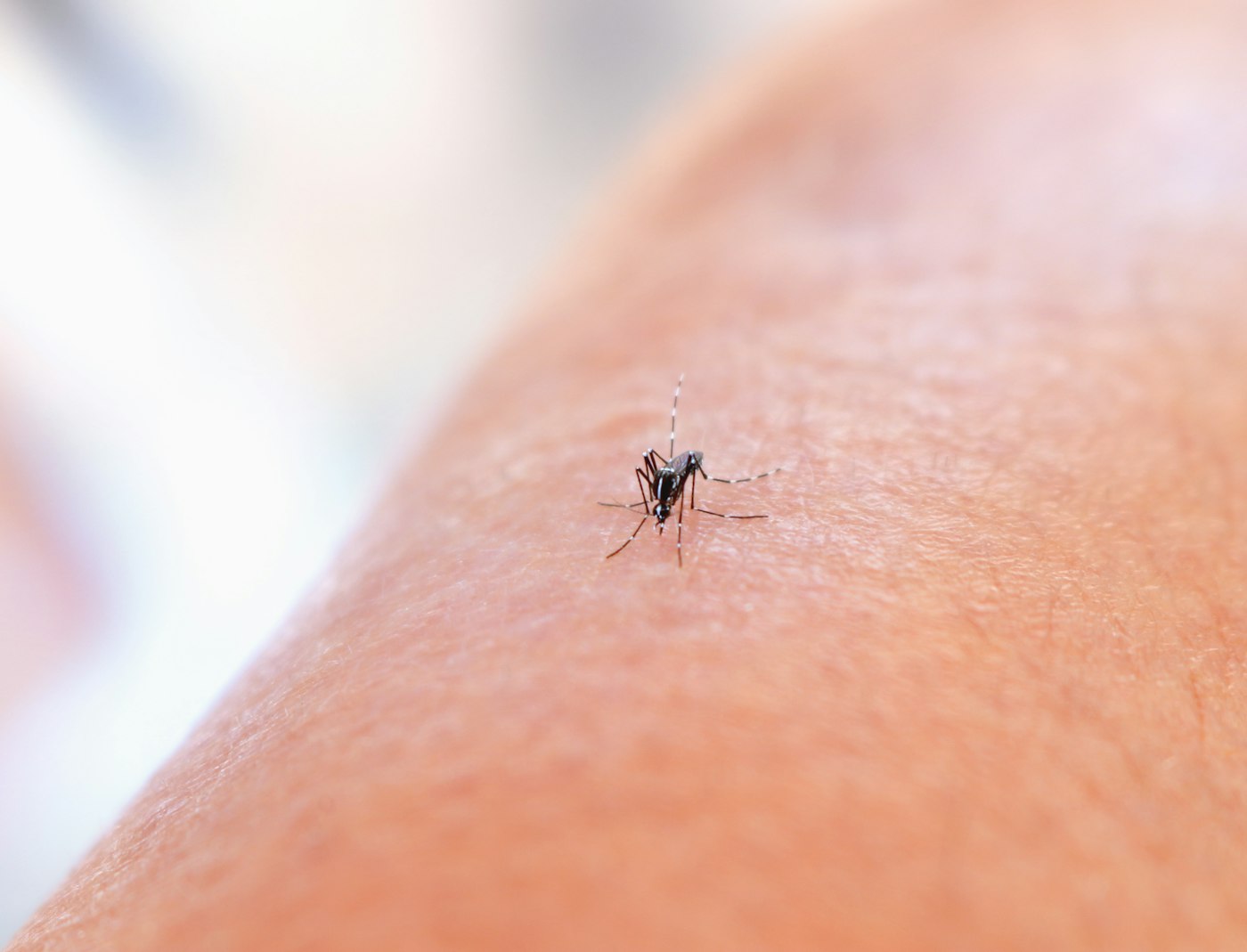
After the river comes up, the picture changes for a few weeks. Water left standing in low bottomland, in old scours and in the ruts of anywhere vehicles have been, produces a flush of floodwater mosquitoes that arrive all at once and then fade. That is a different nuisance from the steady daily biting of the tiger mosquito, and it needs different thinking: those pools drain or dry, and treating foliage will not shorten them.
The practical point for a river-side lot is to walk the low ground after every big rain and look for anything that is still holding a week later: a tarp in the bottom of the yard, a drum washed up in the brush, a boat trailer parked on the flat. A crew should do that with you rather than treating the shrubs by the house and calling it finished. The method in full is in the complete guide.
Say which side of town you are on
An old mill-town lot with outbuildings and a Riverstone back yard need different visits. A licensed local crew should walk the low ground either way.
3 Young families and what to ask about product
Canton skews young, with a lot of households that include small children, dogs and back gardens that are used hard all summer. That makes the product conversation a real one rather than a formality. Ask what is being applied, ask to see the label, and ask what the re-entry interval is before children and pets are back on the grass. A licensed operator is required to be able to produce the label, and the label carries the real instructions rather than a sales claim.
Ask too about flowering plants. A barrier is applied to foliage, not to open blooms, and a technician who understands the job will keep product off anything in flower and off a vegetable bed. If you keep bees or a kitchen garden, say so at booking rather than on the day.
The other thing worth knowing is that source removal is the part with no product in it at all. Tipping the paddling pool every few days, screening the rain barrel, lifting the downspout extension and emptying the toy bin all cut production directly, and they are the only measures that work on the days between visits. Any crew that will not spend time on that part is selling you the easy half.
4 Nearby towns in this hub
Down Highway 575: the new-subdivision half of Canton without the old mill town or the river.
Downstream on the same water: the Etowah feeds Allatoona, where boat gear takes over as the container problem.
Further south, where grown-in 1970s plantings and the Sope Creek corridor set the pattern instead.
5 Questions
Does living near the Etowah mean a longer season?
Usually yes. The bottomland stays damp and shaded when the rest of Canton has dried out, so biting can start earlier in spring and run later in autumn on a river-side lot than it does in a subdivision three miles away. Plan the number of visits around your own ground rather than a standard April to October schedule.
We got swarmed two weeks after the river came up. Was that the same mosquito?
Probably not. A big rise leaves standing water in low bottomland and in ruts, and that produces a sudden wave of floodwater mosquitoes that fades once the ground dries. The steady daytime biting that goes on all summer is the container-breeding tiger mosquito, and that one is still coming from your own lot.
I have a rain barrel. Do I have to get rid of it?
No, screen it. A tight mesh over the inlet and the overflow stops adults getting in to lay and keeps the barrel useful. An unscreened barrel in a shaded corner of an old-town Canton yard is one of the most productive containers you can own.
Is a barrier treatment safe with small children and a dog?
Ask for the product label and the re-entry interval before work starts, and get the answer in writing on the service ticket. A licensed operator must be able to produce the label. Tell them about flowering beds, vegetables and hives at booking, because the applicator should be keeping product off all of those.
Start here
The complete Marietta pest control guide
What a correct job looks like on Piedmont red clay, how crawlspace and slab homes differ, and the questions that separate a real proposal from a guess.
Jaylan Jones — Cobb County Pest Solutions publishes independent guidance for North Georgia homeowners. We are a referral service, not a licensed pest control contractor, and we do not perform the work. How we work.

