
Rodent and wildlife removal is two jobs sold as one. Trapping takes out the animals already inside. Exclusion seals the openings they used, with material they cannot chew through. Only the second one ends it. This hub covers how that work goes on a Cobb County roofline, and gives you a page for each town. For the long version, start with pest control in Marietta.
The short version
What a rodent or wildlife job takes here is decided by how many entry points a house has and how high up they sit, the pitch of the roof and whether a ladder reaches the gable, what material the seal has to be made of, whether there are young in the attic, how much insulation has been soiled, and whether you are buying trapping only or trapping plus exclusion. None of that is visible from the driveway.
Something is in the attic
Say what you hear, when you hear it and where it is. Light scratching before dawn and heavy thumps at dusk are different animals and different work.
1 Everything comes in at the top
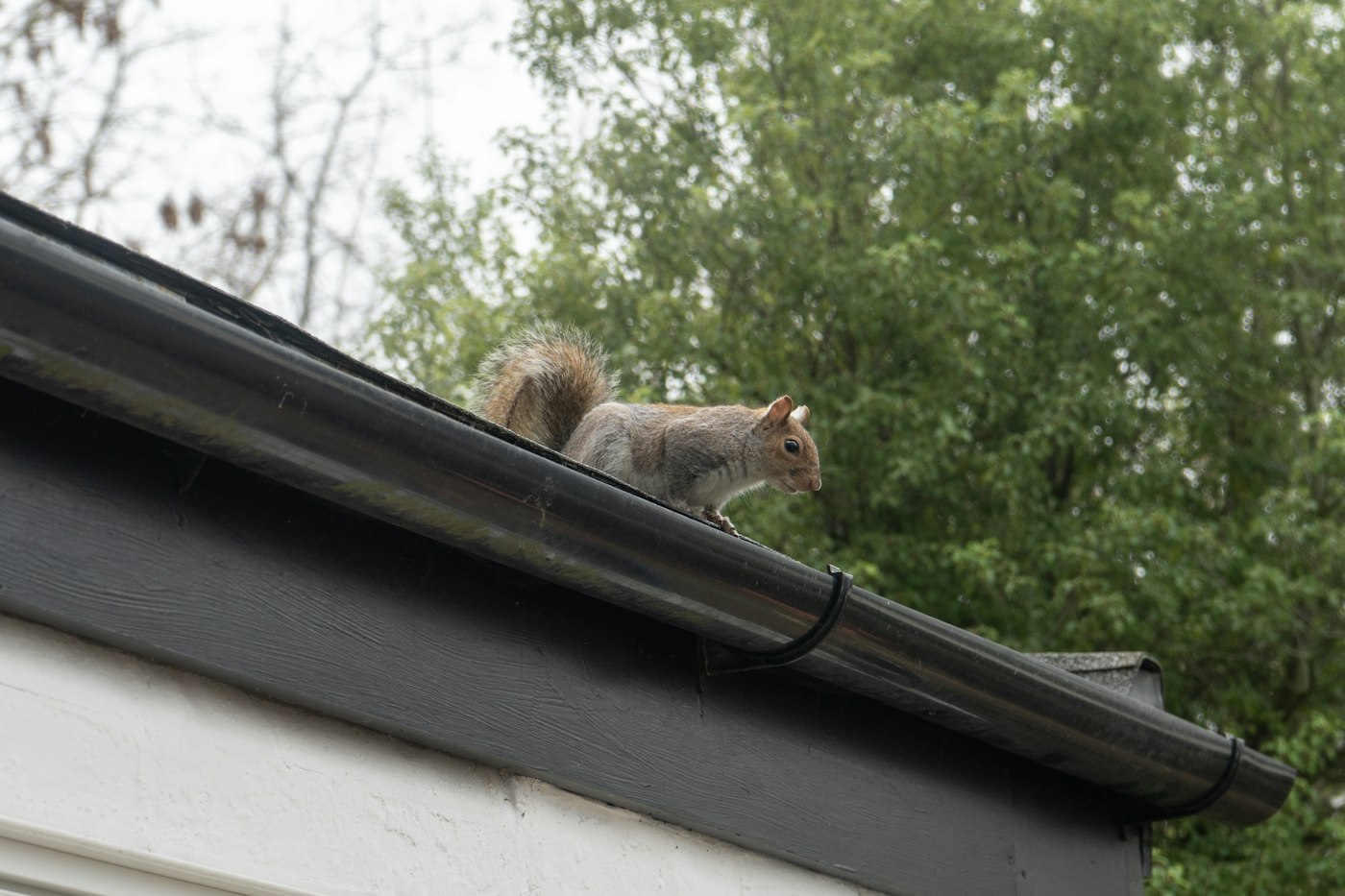
The two animals behind most calls in this county are the gray squirrel and the roof rat, and both of them are climbers. They do not dig under a slab or push through a crawlspace door. They come in at the roofline, which is the part of the house nobody inspects. A homeowner who has sealed every gap he can reach from the ground has sealed the wrong half of the building.
The openings repeat from house to house. A gable vent whose screen has rusted or been pushed out behind the louvers. The gap where a ridge board meets the sheathing at the end of a run. An open soffit return above a porch roof, where the boxed corner was never closed off from the attic. Rotted fascia hidden behind a gutter, soft enough that a squirrel finishes the job in an afternoon. A loose section of flashing where a lower roof dies into an upper wall.
What gets an animal up there is almost always a tree. Marietta and the older towns around it have a mature hardwood canopy with limbs sitting on roofs, and a squirrel does not need to climb the wall if a branch delivers it to the shingles. Cutting limbs back from the roof is the single highest-value thing a homeowner can do without a contractor.
2 Trapping is the smaller half
Exclusion beats trapping, and it is not close. Traps remove the animals in the attic this week. They do nothing about the hole, and the hole is the house’s permanent feature. A proposal that lists trapping and says nothing about sealing is a proposal to repeat the visit next autumn, which is why you should read the scope line before anything else.
Sealing is a materials question. Expanding foam, caulk and loose steel wool are chewed through or pulled out. A seal that holds is galvanized hardware cloth, sheet metal, or new wood behind metal, fastened rather than stuffed, and shaped to the opening. Vents get screened from behind, not covered over. Soffit returns get closed off from the attic side.
Sequence matters as much as material. Everything gets sealed except the main run, animals are trapped or allowed out through a one-way door, and only then does the last opening close. Reverse that order and you seal animals inside a wall, or you seal a mother out and leave a litter in. That is also why a crew should ask about young before quoting a schedule. The same argument in full sits in pest control across Cobb County.
3 The season turns in mid-October
Rodent calls in Cobb County start the week overnight lows drop, usually in the middle of October. Nothing has changed about the house. What changed is that a warm attic is now worth the climb. The same opening that was ignored all summer becomes the obvious door, and a roof rat that has been living in an ivy bank or a woodpile moves twenty feet and upward.
That makes late summer and early autumn the right window for exclusion work, because sealing an empty attic is simple and sealing an occupied one is not. It also means an inspection in September is looking for openings, while the same inspection in December is looking for droppings, soiled insulation, chewed wiring and whatever came in behind the first arrival.
4 Pick your town
The animals are the same across the county. The rooflines are not, because the houses were built in different decades by different crews.
Squirrels, raccoons and bats in 1970s attics under a heavy hardwood canopy, and what changes when there are young up there.
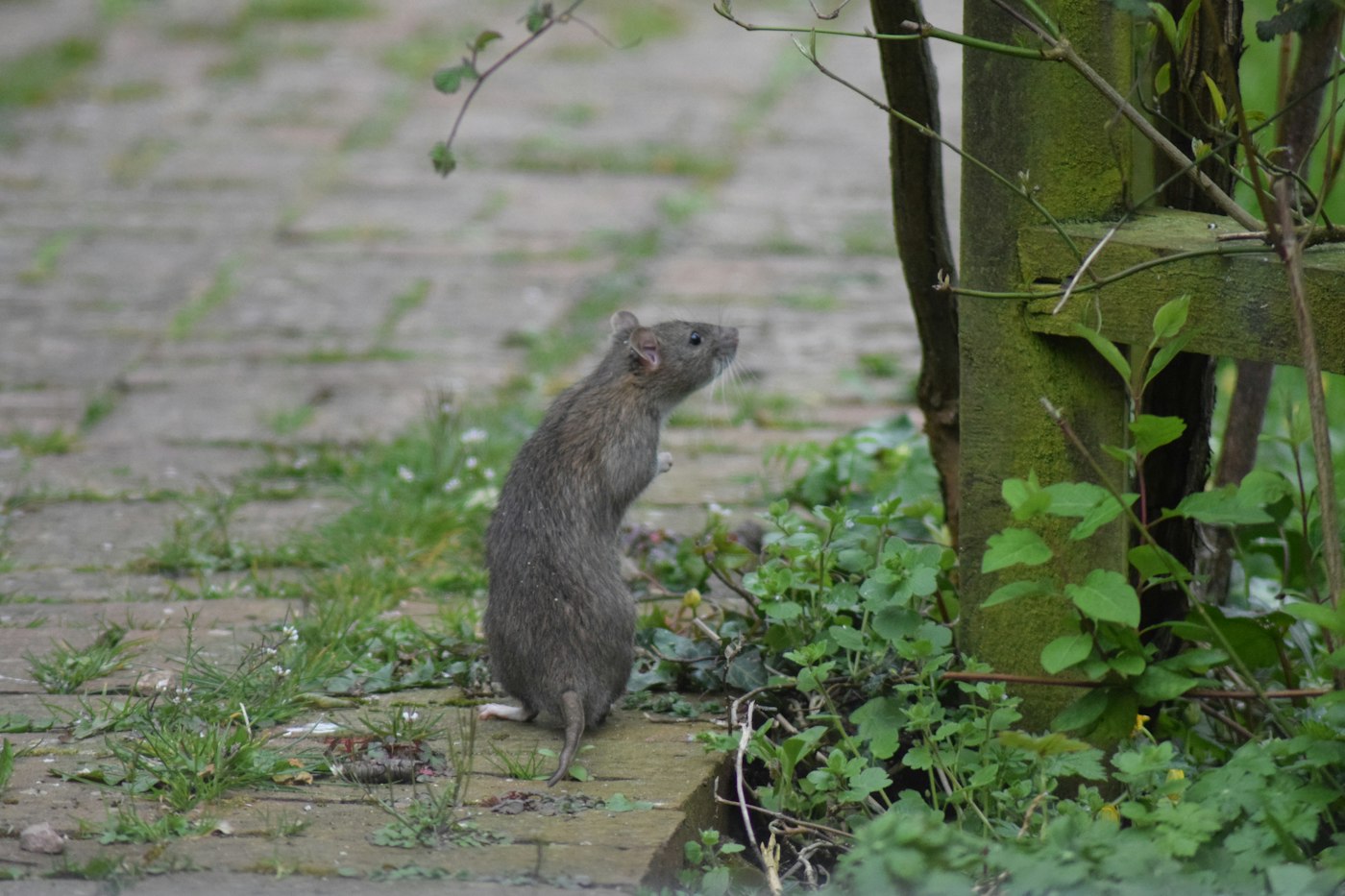
Roof rats specifically: droppings along a joist, gnawed wiring, and why bait stations leave the opening exactly where it was.
Battlefield canopy on three sides of town, gutters packed with leaves by November and limbs lying flat on the shingles.
Lake Acworth and Lake Allatoona lots, where boats, docks and stored gear give rodents a staging area next to the house.
Median build year 2005, so the failures are builder hardware: stapled gable screen and vinyl soffit panels that pop at the corner.
A split town: old-town frame houses with pier foundations and century-old attic venting, and new slab subdivisions toward the Etowah.
Mid-1980s ranches between Nickajack Creek and the Chattahoochee corridor, with crawl vents of that era and a wooded river edge behind them.
Early-1990s subdivisions whose vinyl soffit returns above the porch work loose at the corner and open straight into the attic.
Sweetwater Creek and Noses Creek. When the water comes up, ground-level harborage goes under and rodents move up into houses.
Median build year 1984 under heavy mature hardwood, with limbs touching the roof on a large share of lots.
5 Where to read next
- The complete guide — what a correct job looks like on Piedmont red clay, how crawlspace and slab homes differ, and the questions that separate a real proposal from a guess.
- Attic wildlife in Marietta — squirrels, raccoons and bats, and what changes once there are young in the insulation.
- Rat and mouse removal in Marietta — the rodent version of the same house: droppings, gnawing, bait stations and why sealing still decides it.
- Talk to a licensed local pro — if you already know what you are hearing and want someone on a ladder.
Start here
The complete Marietta pest control guide
What a correct job looks like on Piedmont red clay, how crawlspace and slab homes differ, and the questions that separate a real proposal from a guess.
Jaylan Jones — Cobb County Pest Solutions publishes independent guidance for North Georgia homeowners. We are a referral service, not a licensed pest control contractor, and we do not perform the work. How we work.

