
Mosquito control in Cobb County is a water job before it is a spraying job. The mosquito biting you in your own back yard in July almost certainly hatched within a hundred yards of where you are standing, out of something on your lot or your neighbor’s that has held water for about a week. This hub covers what the work involves here, and gives you a page for each town. For the long version, start with pest control in Marietta.
The short version
What a mosquito job takes on your property is decided by lot size and how much of it is actually treatable, how much shade and dense foliage you have, how many water-holding containers sit on the lot and next door, whether you back onto a creek or a lake, how often you want a crew back between April and October, and whether anyone removes the breeding sources before the barrier goes on. None of that can be judged over the phone.
Find out what is breeding on your lot
Describe your yard, your shade and what sits next door. A licensed local crew should walk the property and tell you what to dump before anyone opens a sprayer.
1 Source reduction first, barrier second
A correct visit starts with a slow walk of the whole property, looking for water rather than insects. A container is anything that holds water for about a week: a clogged gutter, a pot saucer, a corrugated downspout extension lying in the grass, a fold in a tarp over the woodpile, a bird bath nobody tips out, a tire behind the shed, the sump of an unused fountain, a bin with no lid. Each of those can produce hundreds of adults, and the adults do not go anywhere.
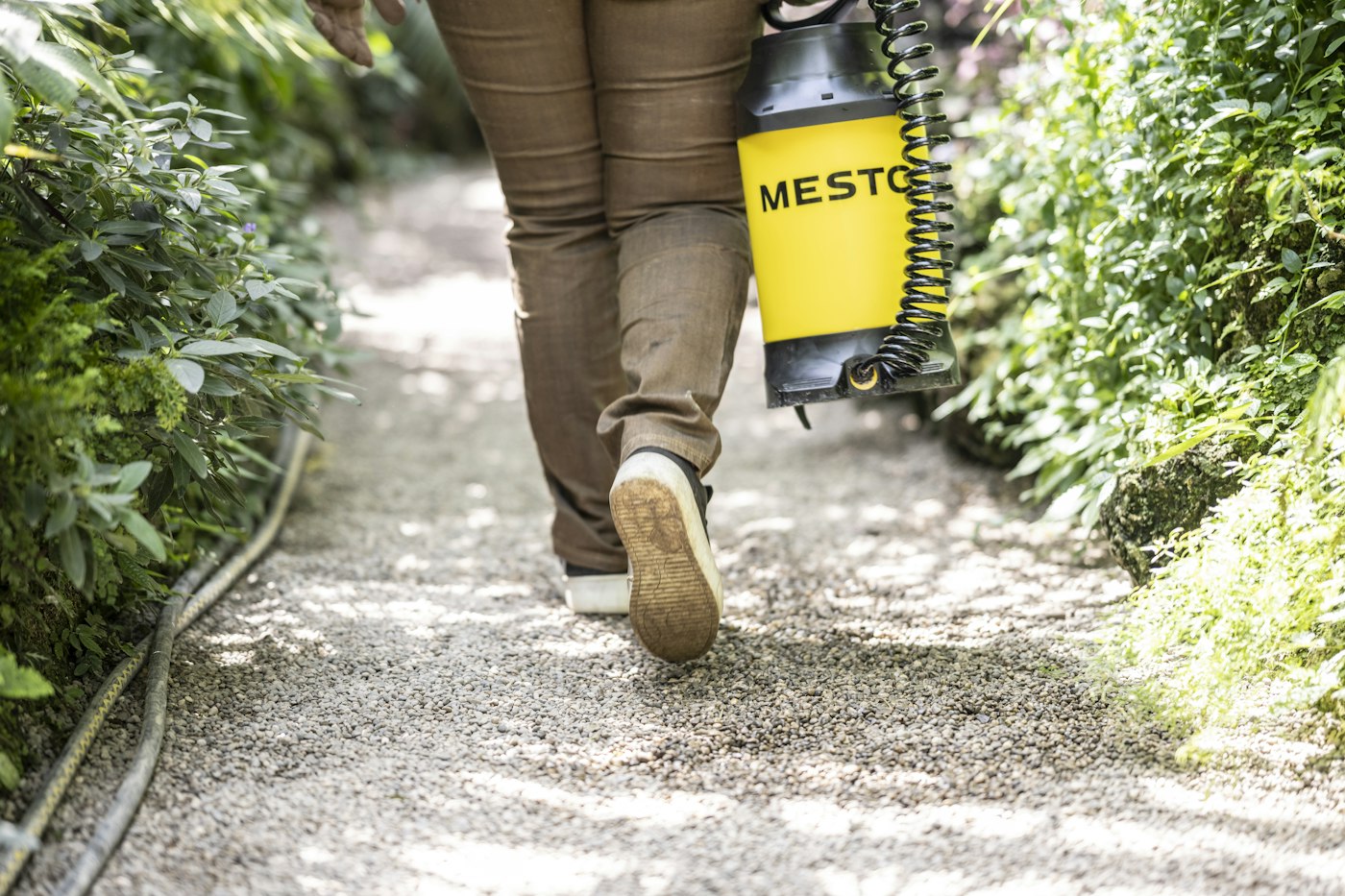
Only after that does product go down. Barrier treatment is a residual applied to the undersides of foliage and to the shaded places adults rest through the day: under deck boards, in ivy and liriope, along fence lines, in the dense center of boxwood and holly, behind the air conditioning unit. It holds for roughly three to four weeks and then needs renewing, which is why the work is sold as an interval rather than a one-off.
The order matters more than the product does. A barrier cannot outpace a breeding source left in place. If a saucer under the fig tree is making new adults every four days, you will be re-treating the same yard all summer and blaming the chemical. A crew worth hiring walks the lot and tells you what to dump before it treats, and says plainly which parts of the property it cannot reach.
2 The species doing the biting
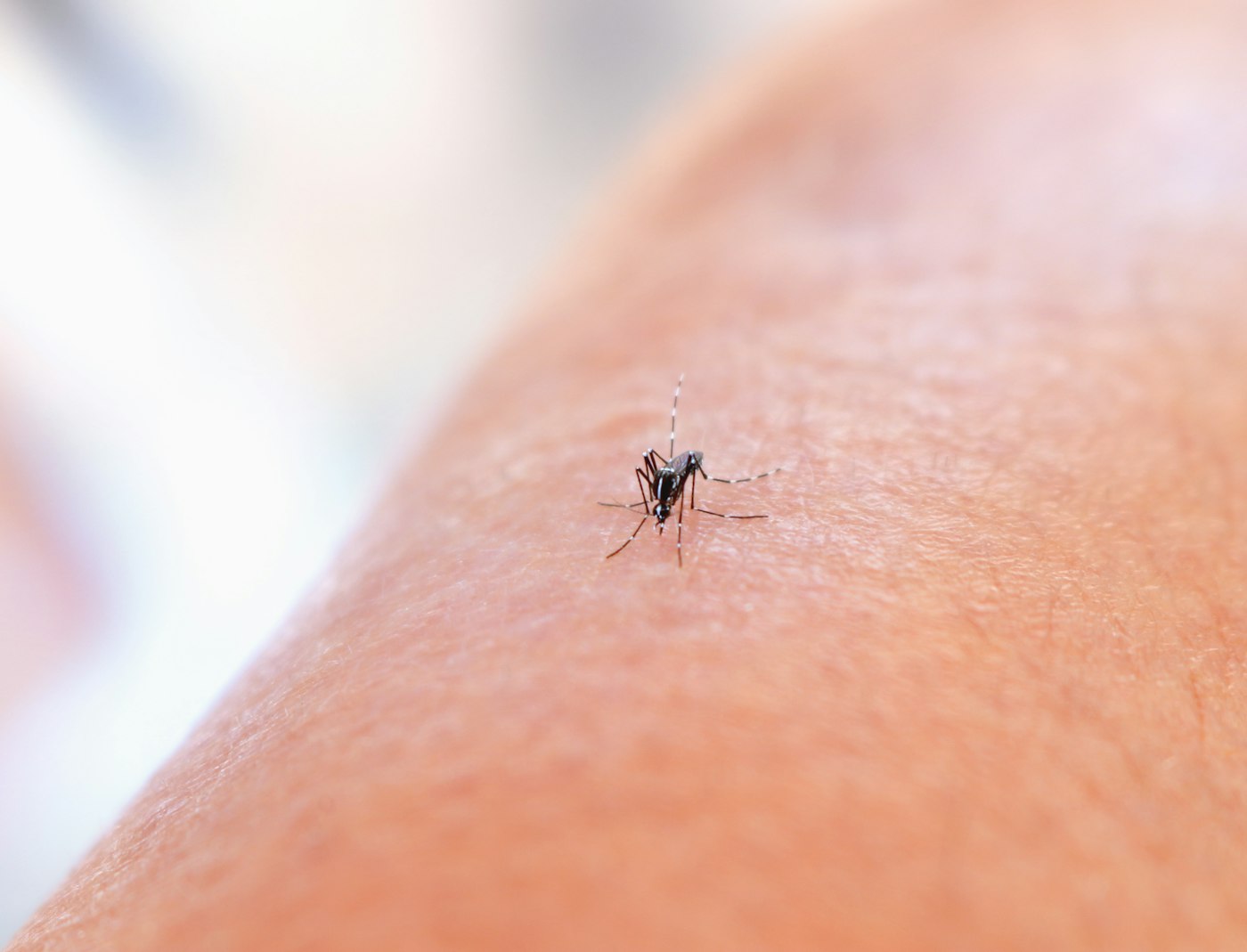
In metro Atlanta the yard mosquito is the Asian tiger mosquito. It is black with white banding on the legs, it bites in daylight rather than at dusk, and it goes for ankles and the backs of knees while you are gardening at two in the afternoon. People who expect mosquitoes only at sunset often decide they have no mosquito problem, then come inside at four covered in bites.
Two habits of this species decide the whole job. It is a container breeder, so it does not need a marsh or a pond; a bottle cap of water in a shaded spot is a nursery. And it is a weak flier that stays close to where it emerged. That is good news: the water producing your problem is on your property or immediately next door, which means it is findable and usually fixable.
Season runs April through October across the county, and longer on creek and lake frontage where the ground and the air stay damp into November. Treatment on a three to four week interval across that window is the usual cadence. If your neighbor keeps a dozen untended pots on the fence line, say so when you book, because that lot is part of your problem and a crew can at least tell you what to ask for. The whole method is laid out in pest control across Cobb County.
3 Pick your town
Every town here has the same species. What changes is the water: which creek runs behind the houses, how much canopy sits over the yards, and how big the lots are.
Sope Creek behind the east-side neighborhoods, and 1970s lots whose plantings have grown into solid daytime shade.
Hardwood canopy off Kennesaw Mountain, deep resting shade all day, and gutters that fill from the same trees.
Lake Acworth and Lake Allatoona frontage, with boat covers, tarps and dock gear holding water between uses.
Median build year 2005: small lots, close neighbors, and corrugated downspout extensions in nearly every bed.
The Etowah River corridor, plus old-town yards with outbuildings and new subdivisions on cleared ground.
Nickajack Creek and the Chattahoochee corridor, where clay stays saturated for days and the season runs long.
Early-1990s subdivisions built around detention ponds, with the vegetated edge usually on common ground.
Sweetwater Creek and Noses Creek, and low yards that hold pooled water in the ruts for days after a storm.
Mature hardwood over 1980s lots: the most resting habitat per square foot of any town in this hub.
4 Where to read next
- The complete guide — what a correct job looks like on Piedmont red clay, how crawlspace and slab homes differ, and the questions that separate a real proposal from a guess.
- Mosquito control in Austell, GA — the hardest case in the county: two creeks, low ground and a season that starts early.
- Mosquito control in Woodstock, GA — the opposite case: new, tight lots where your neighbor’s containers are twenty feet from your deck.
- Talk to a licensed local pro — if you want someone to walk the lot and name the water before anything is applied.
Start here
The complete Marietta pest control guide
What a correct job looks like on Piedmont red clay, how crawlspace and slab homes differ, and the questions that separate a real proposal from a guess.
Jaylan Jones — Cobb County Pest Solutions publishes independent guidance for North Georgia homeowners. We are a referral service, not a licensed pest control contractor, and we do not perform the work. How we work.

