
Pest control in Marietta › Termite control › The Georgia termite letter
Nearly every Georgia house sale involves a termite letter, and nearly everybody misreads it. This page covers what the Official Georgia Wood Infestation Report is, the exact limits of what it reports, the three findings people confuse, who orders it, and why it is not a warranty on anything. Start with the complete guide for the wider picture.
Why Georgia takes it seriously
The state sits in Termite Infestation Probability Zone 1, the highest tier on the national map. Piedmont red clay holds moisture far longer than the sand south of the fall line, so eastern subterranean termites here forage year round. That is why a document nobody reads carefully is attached to almost every closing in north Georgia.
1 What the document is
It is a standard state form. Everybody calls it the termite letter, the industry calls it the WDO report, and its proper name is the Official Georgia Wood Infestation Report. A single form means a buyer in Marietta and a buyer in Savannah are reading the same boxes in the same order, which is useful once you know what the boxes mean.
Wood destroying organisms is broader than termites. The report covers subterranean termites, which is what Georgia mostly has, but also drywood termites, powderpost beetles, old house borers and wood-decay fungus. A finding of beetle exit holes in a crawlspace is not a termite finding, and the distinction matters because the remedies are different.
The person who signs it has to be licensed, and the company has to be registered to perform the inspection. The signature is the point of the document: a named professional is attesting to what was visible, which is also why a report from a company with no local history is worth less than one from a firm you can call again next year.
2 Visible evidence, accessible areas, one day
Three limits are built into the form, and together they describe everything the letter is not. The first is visible evidence. An inspector reports what can be seen, not what might be there. No instrument tells you whether termites are working inside a stud wall, so nothing about a clear report rules that out.
The second is readily accessible areas. Walls do not get opened. Insulation does not get pulled. Stored boxes, furniture, carpet, a sealed crawlspace, a finished basement ceiling, a garage packed to the door: all of it blocks the inspection, and the report has a section for listing exactly that. Those exclusions are the most informative part of the document and the part buyers skip.
The third is the date. The report describes one morning. A house inspected in February and swarming in April is not a contradiction and not negligence; it is what a snapshot is. Lenders generally want the report dated close to closing for exactly this reason.
Read the exclusions before the findings
A licensed local inspector will tell you what they could not reach, and on an older Cobb County house that list is the real report.
3 Active, previous, and damage
The form separates three findings that people hear as one alarming thing. Learning the difference is the single most useful ten minutes a buyer can spend.
Active infestation
Live organisms are present: workers in a broken mud tube, swarmers, fresh tubes with moist soil. This is the finding that drives a condition at closing, because it is a problem happening now and somebody has to treat it.
Previous infestation
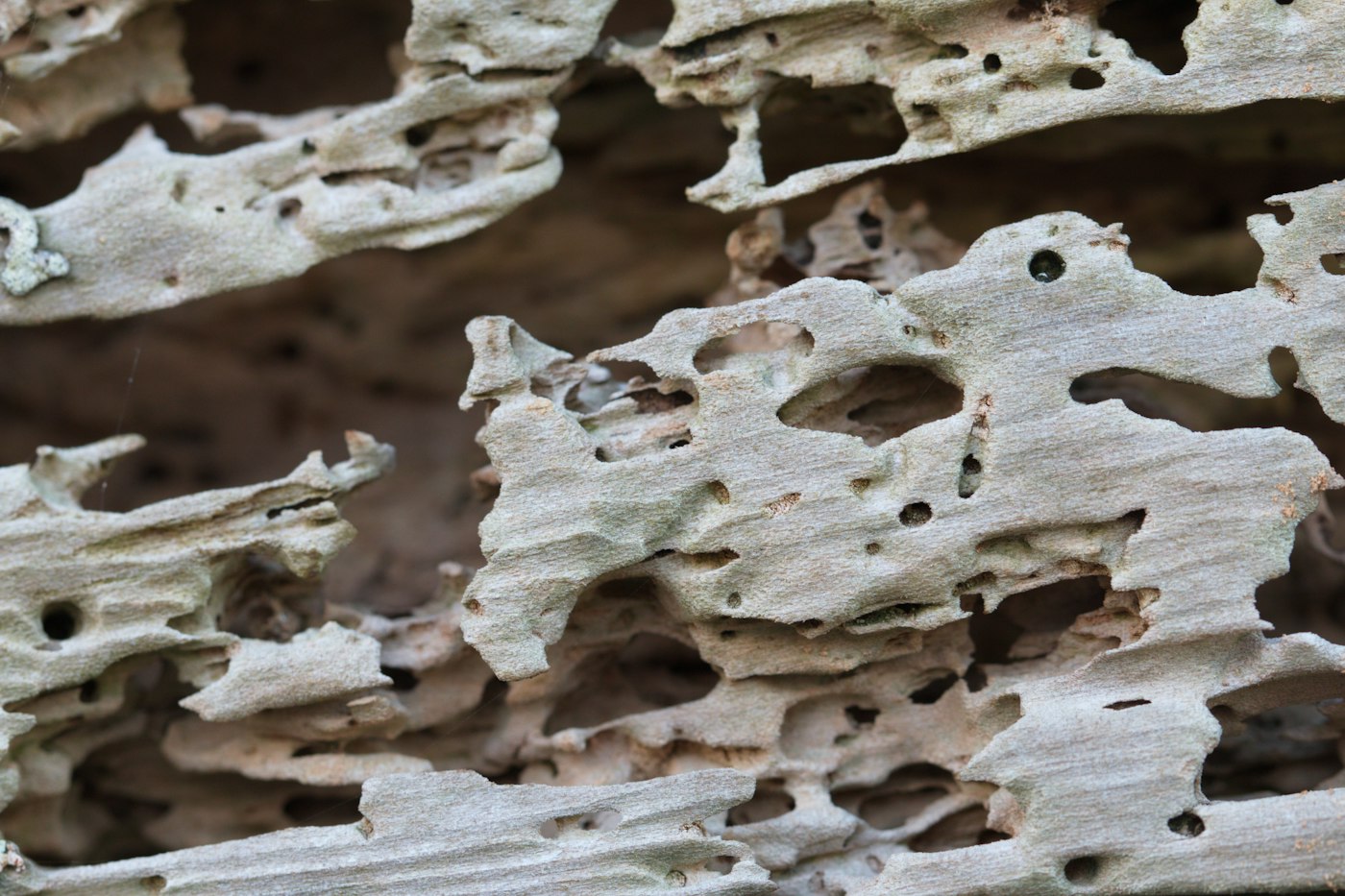
Evidence that termites were here at some point: dry abandoned tubes, old galleries, drill holes and patch marks from a treatment somebody paid for in 1994. On a Marietta house built around the 1978 median this is a routine finding and not in itself a reason to walk away. Ask for the treatment records and the bond history.
Damage
A condition of the wood, reported independently of whether anything is alive in it. The inspector records damage; the inspector does not assess whether the structure is sound, because that is an engineering question and outside the license. If damage is noted on a load-bearing member, the next call is a structural engineer, not another pest company.

4 Who orders it, and when
In most Georgia transactions the seller arranges it, though the contract decides and it is negotiable like anything else in a purchase and sale agreement. The lender is usually the party that requires it, and lender requirements vary by loan product, which is why a refinance may or may not need one. Ask the loan officer early rather than assuming.
Timing is where north Georgia closings come apart. Swarm season runs March to May, which is when every seller calls at once, so inspection calendars stretch in exactly the weeks when a live swarm is most likely to turn a clean report into a finding. Add a backlog to a finding that needs treatment before closing and a comfortable schedule becomes a delayed one.
Practical advice for a spring closing: book as soon as the contract is signed, clear the crawlspace hatch and the garage wall before the inspector arrives, and have the house’s termite history ready. If you need a licensed company to do it, start here.
5 Why it is not a warranty
This is the misunderstanding that does real damage. A clear termite letter is not a promise that the house has no termites, and it commits nobody to anything if termites appear next spring. It says a licensed person looked at the accessible parts of this structure on this date and recorded what was visible. That is all it says, and the form itself says so.
What does carry an obligation is a bond, which is a contract with the company that treated the house and which continues as long as it is renewed. A letter and a bond are routinely confused at closing, usually by someone assuming the clean letter means they are covered. They are different documents with different purposes, and a buyer who wants protection wants the second one.
So treat the letter as what it is: a useful, limited, dated record. Read the exclusions, read the findings carefully, ask for the prior treatment paperwork, and then decide separately how the house will be protected going forward. The questions worth asking a company are set out in the Marietta pest control guide.
Keep reading in this topic
What the inspector physically does, from the exterior lap to the moisture meter.
Retreatment-only or repair, limits, exclusions and transferability.
Keeping a transferred bond alive, and what a lapse ends for the new owner.
6 Questions
How long is a termite letter good for?
Lenders typically want one dated within about thirty days of closing, and older reports get rejected routinely. If a closing slips a month, expect to have the inspection done again rather than arguing about the date.
The report says active infestation. Does the sale collapse?
Rarely. It usually becomes a condition: the structure is treated by a licensed company before closing, with the paperwork handed over, and the parties negotiate who arranges it. What a buyer should insist on is the treatment record and whatever bond is attached, not just a verbal assurance that it was handled.
Can the same company inspect and then treat?
Yes, and it is normal, but notice the incentive. If a finding on a form leads directly to work for the firm that wrote the form, a second licensed opinion is reasonable, particularly when the finding is borderline or the recommended work is extensive.
I am selling. Can I tidy up before the inspection?
You should, and tidy means access rather than concealment. Clear the crawlspace hatch, move boxes off the garage walls, pull firewood and stored lumber away from the house, trim plantings off the foundation. Covering evidence is a different thing entirely and it tends to surface later, with the disclosure consequences that come with it.
Start here
The complete Marietta pest control guide
What a correct job looks like on Piedmont red clay, how crawlspace and slab homes differ, and the questions that separate a real proposal from a guess.
Jaylan Jones — Cobb County Pest Solutions publishes independent guidance for North Georgia homeowners. We are a referral service, not a licensed pest control contractor, and we do not perform the work. How we work.

