
Pest control in Marietta › Termite control in Cobb County
This is the termite section of the site. It covers how eastern subterranean termites reach a Cobb County house, what a correct treatment looks like on Piedmont red clay, and how the bond you sign afterwards decides who pays if they come back. Georgia sits in Termite Infestation Probability Zone 1, the highest tier in the country, so this is not an optional line item here. For everything else — ants, roaches, rodents, mosquitoes — start with the complete guide.
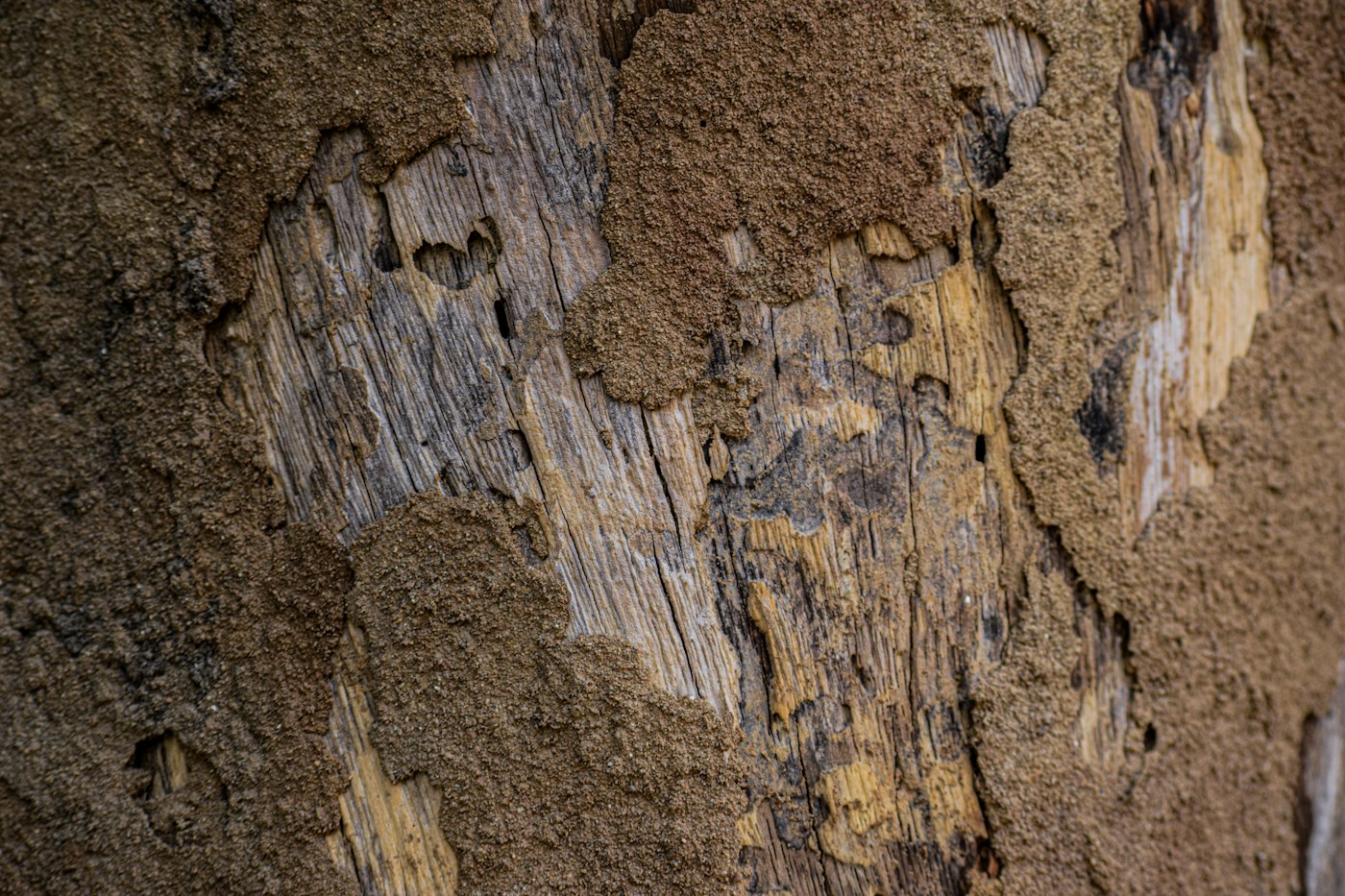
Swarmers indoors, or mud tubes on a pier?
Both mean an active colony is already working. Get the foundation measured and inspected before you agree to anything.
1 What termite work on a Cobb County house involves
A liquid soil barrier means trenching and rodding the full perimeter of the foundation, drilling through slabs, porches, stoops and attached patios, and placing a non-repellent termiticide in the soil the colony forages through. Non-repellent means the termites cannot detect it. They walk through the treated band, carry it back and pass it around. Done right it is a continuous treated zone with no gaps, and gaps are where the retreatment calls come from.
In-ground bait stations ring the house in the soil at set intervals. Termites find them, feed on a growth regulator and carry it back to the colony. It is slower — months, not days — and it only works if somebody actually comes out and services the stations on schedule. A bait system nobody checks is landscaping.
Neither method is automatically right. Finished basements, heavy hardscape, shallow wells and high water tables push a house toward bait. Long, open, diggable perimeters on red clay usually favor liquid. A lot of Cobb County houses end up with both.

2 What shapes the proposal you get
A real proposal starts with a tape measure. The installer walks the foundation and writes down the linear footage, because that is the quantity of trench, soil and product the job consumes. A 170-foot perimeter and a 340-foot perimeter are not the same job and should never carry the same number. After footage, these are the things that move it: foundation type, access and obstructions, soil and moisture, the product chosen, and the warranty you end up holding.
Crawlspace homes need interior access, pier-by-pier treatment and usually a moisture conversation. Slab homes need drilling on a set spacing, and every porch, stoop and attached patio is another drilling run. Decks, sunrooms, AC pads, retaining walls, mature shrubs and tight side yards all slow a crew down or force them to work around a section they cannot reach — and an untreated section is a gap in the barrier, not a discount. If a section genuinely cannot be reached, that belongs in writing on the proposal. When you are ready to compare two of them side by side, talk to a licensed local pro.
Then the bond. A retreatment-only bond means the company comes back and treats again at no charge, and nothing more. A repair bond means they also pay to repair the wood. Those are two different risks carried by two different parties. Ask for the renewal schedule for the next five years in writing, and ask whether the bond transfers to a buyer if you sell. In this market a transferable bond is a real asset at closing.
The Official Georgia Wood Infestation Report
This is the form a lender usually wants at closing. Read what it actually says. It reports visible evidence in accessible areas on the day of the inspection — nothing more. Behind drywall, under insulation, inside a sealed crawlspace corner the inspector could not get to: none of that is covered. A clean report is a record of what was visible, not a guarantee the house is clean.
3 Termite control by city
Housing era decides foundation type, and foundation type decides most of the job. Each page below is about the ground and the building stock in that town. For the countywide picture across every pest, read pest control across Cobb County.
Marietta — median build year 1978, so crawlspace brick ranches dominate, and the Sope Creek side of town stays damp under the floor long after a rain.
Woodstock — median build year 2005. Slab-on-grade subdivisions where the original builder-installed barrier is now near the end of its service life.
Kennesaw — a mixed-era town under the Kennesaw Mountain hardwood canopy, where shade keeps the north side of a foundation wet all year.
Acworth — shoreline lots off Lake Acworth and Lake Allatoona, with a shallow water table that changes how a trench holds product.
Mableton — mid-1980s stock in the Nickajack Creek and Chattahoochee corridor, much of it crawlspace with vents at grade.
Powder Springs — early-1990s subdivisions built around detention ponds, with slabs and long irrigated perimeters.
Austell — Sweetwater Creek and Noses Creek bottomland, where soil moisture is the controlling variable on almost every job.
Dunwoody — median build year 1984 under a mature hardwood canopy, with deep crawlspaces and heavy leaf litter against the foundation.
Canton — split between old-town pier-and-beam houses and new slab subdivisions above the Etowah River.
4 Other guides on this site
General pest control in Cobb County covers ants, roaches and the quarterly service plan. Mosquito control in Cobb County deals with the Asian tiger mosquito and standing water from April to October. Rodent and wildlife removal picks up from mid-October, when rodents move indoors.
Start here
The complete Marietta pest control guide
What a correct job looks like on Piedmont red clay, how crawlspace and slab homes differ, and the questions that separate a real proposal from a guess.
Jaylan Jones — Cobb County Pest Solutions publishes independent guidance for North Georgia homeowners. We are a referral service, not a licensed pest control contractor, and we do not perform the work. How we work.

