
Pest control in Marietta › Mosquito control › Marietta
This page covers what mosquito work involves in Marietta, where a fifty-year-old yard and a creek on the far side of the fence do most of the damage. Start with the Marietta pest control guide for the whole method, then read this for the local part.
What shapes the job here
Lot size and how much of it a crew can actually reach, how dense the grown-in plantings are, the number of water-holding containers on your lot and the one next door, whether you back onto Sope Creek or a wooded draw, the interval you want across the season, and whether anybody clears the sources before the barrier goes on.
1 A 1978 yard is a grown-in yard
Marietta’s median build year is 1978, and around the Square and west of Roswell Road the houses are older still. What matters for mosquitoes is not the house, it is what has happened to the planting since. A foundation bed planted with one-gallon shrubs in 1978 is now a solid wall of holly and camellia three feet deep, with a dark, humid interior that never sees sun. That is exactly the resting habitat an adult tiger mosquito spends its day in, and it is why a Marietta yard can feel worse at two in the afternoon than a bare new lot does at dusk.
Old yards also accumulate containers. Fifty years of ownership leaves pot saucers behind the shed, a bird bath nobody tips, a stack of nursery pots by the compost, a wheelbarrow parked upright against the fence, a boat cover with a sag in it. A container is anything that holds water for about a week, and each one can turn out hundreds of adults that stay in the same yard.
Gutters are the one most people miss. On a 1970s ranch under forty years of accumulated canopy, the gutter at the back of the house fills with leaf litter, holds a shallow trough of water along its whole length and breeds continuously all summer, fifteen feet above anyone’s head. No barrier applied at ground level touches it.
2 Sope Creek and the east side
East Marietta sits above Sope Creek, and the neighborhoods off Paper Mill and Johnson Ferry back onto the wooded park land along it. People assume the creek itself is the nursery. It mostly is not: moving water is poor habitat for a container breeder, and the tiger mosquito does not need a creek. What the corridor actually gives you is permanent humidity and deep shade along your back fence, so the resting habitat on that side of the lot never dries out and the season runs a few weeks longer at both ends.
The real breeding sites on a creek-backing lot are small and man-made: a wheelbarrow or a bucket left at the bottom of the garden where nobody walks, a tarp over a woodpile at the tree line, the stump hole of a tree that came down in a storm, a corrugated downspout extension running into the trees with a low spot in it. The back of the lot is where a crew should slow down, and it is also the part that often gets skipped because it is awkward to reach.
Ask the crew to say out loud which parts of the property they will not be treating. Park land across the fence cannot be treated, and nothing you buy changes that. The honest version of the job is a tight barrier on your own edge plus genuine source removal inside it. The argument in full is in the complete guide.
Say which Marietta you live in
A grown-in yard near the Square and a creek-backing lot off Paper Mill are different jobs. A licensed local crew should walk both before treating either.
3 Shared walls, shared water
Marietta inside the city limits has a much larger share of townhouses, duplexes and apartments than the rest of the county. That changes the job in a specific way: the container producing your mosquitoes is often not on ground you control. A rubbish enclosure that holds rainwater, a lidless bin behind the building, a landscape bed with pot saucers left by whoever maintains the common area, a courtyard fountain switched off for the season with water still sitting in the sump.
Because the tiger mosquito is a weak flier, that is useful information rather than a dead end. If the biting is heavy on one side of a building and light on the other, the source is within a short flight of the bad side, and it is worth walking that strip yourself before anybody is booked. A single untended container in a shared bed can keep an entire row of patios unusable.
If you rent or sit under an association, get the source removal into the common-area schedule rather than paying for a barrier that gets re-colonised within days. A barrier holds three to four weeks. A container next door refills in one rainstorm.
4 Nearby towns in this hub
Mountain canopy instead of grown-in planting: shade from above rather than from a fifty-year-old shrub bed.
1990s subdivisions laid out around detention ponds, where the wet edge belongs to the association.
The heaviest canopy in this hub, and the longest list of things to dump before a barrier is worth applying.
5 Questions
My lot backs onto the Sope Creek park land. Is that the source?
Almost certainly not directly. Moving water is poor habitat for a container breeder, and this species does not travel far. What the corridor gives you is shade and humidity along the back fence, which keeps adults comfortable and stretches the season. The actual nurseries are small containers on your side of the line: buckets, tarps, stump holes, a downspout extension with a sag in it.
Why am I getting bitten in the middle of the afternoon?
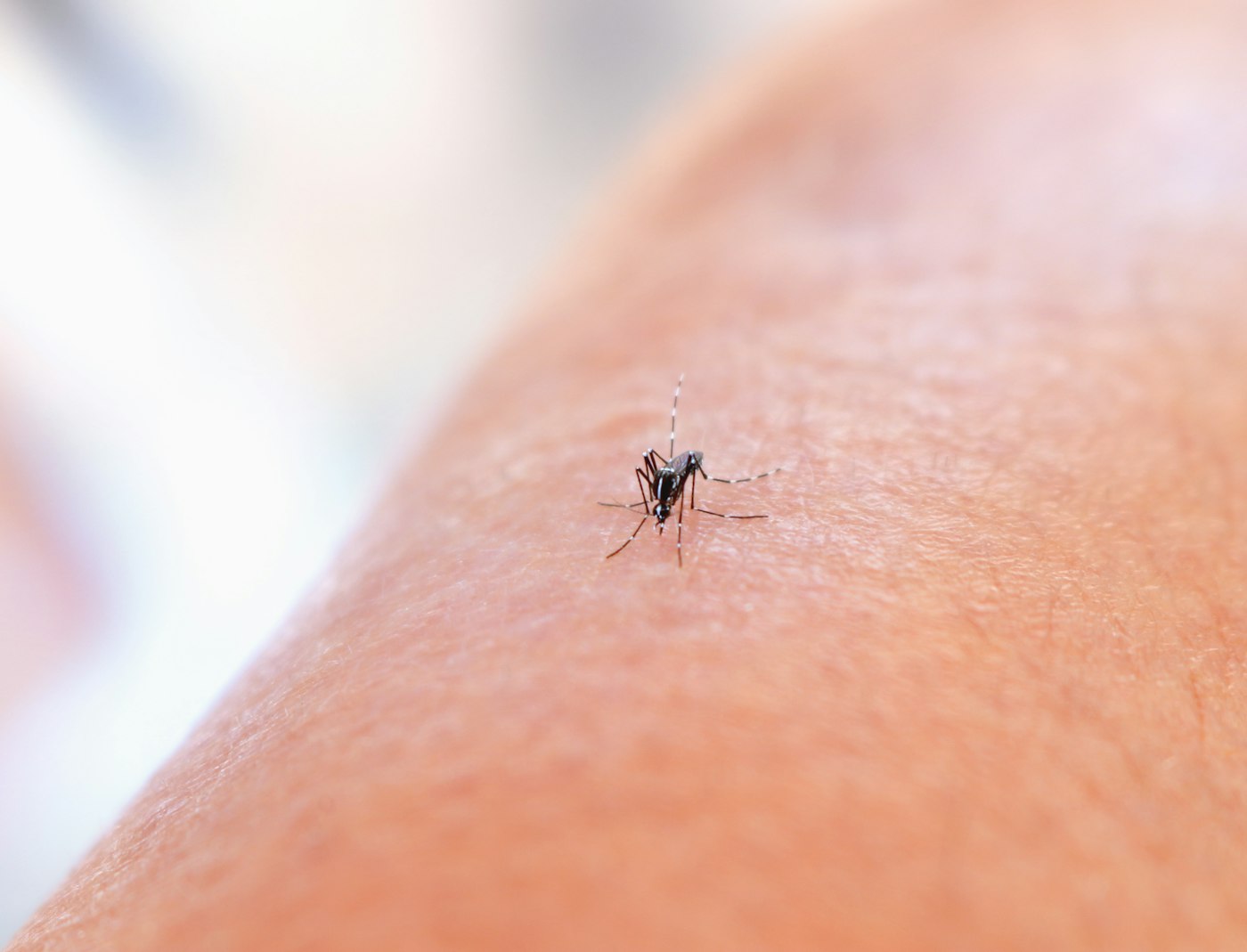
Because the species biting you is the Asian tiger mosquito, which is a daytime feeder. It rests in dense shaded foliage and comes out at ankle height when you disturb it. If you only expect mosquitoes at dusk you will misread your own yard completely.
How long does a barrier treatment keep working?
Roughly three to four weeks in Marietta conditions, less after heavy rain or if the foliage is growing fast in June. That is why the work is sold as an interval across April to October rather than as a single visit, and why source removal matters: a residual that lasts a month cannot keep up with a container turning out new adults every few days.
Should I cut back the shrubs before a visit?
Thinning the dense interior of overgrown foundation beds helps twice over: it removes resting habitat, and it lets a technician get product onto the undersides of leaves that were previously unreachable. On a grown-in Marietta yard that single job often does more than an extra treatment would.
Start here
The complete Marietta pest control guide
What a correct job looks like on Piedmont red clay, how crawlspace and slab homes differ, and the questions that separate a real proposal from a guess.
Jaylan Jones — Cobb County Pest Solutions publishes independent guidance for North Georgia homeowners. We are a referral service, not a licensed pest control contractor, and we do not perform the work. How we work.

